

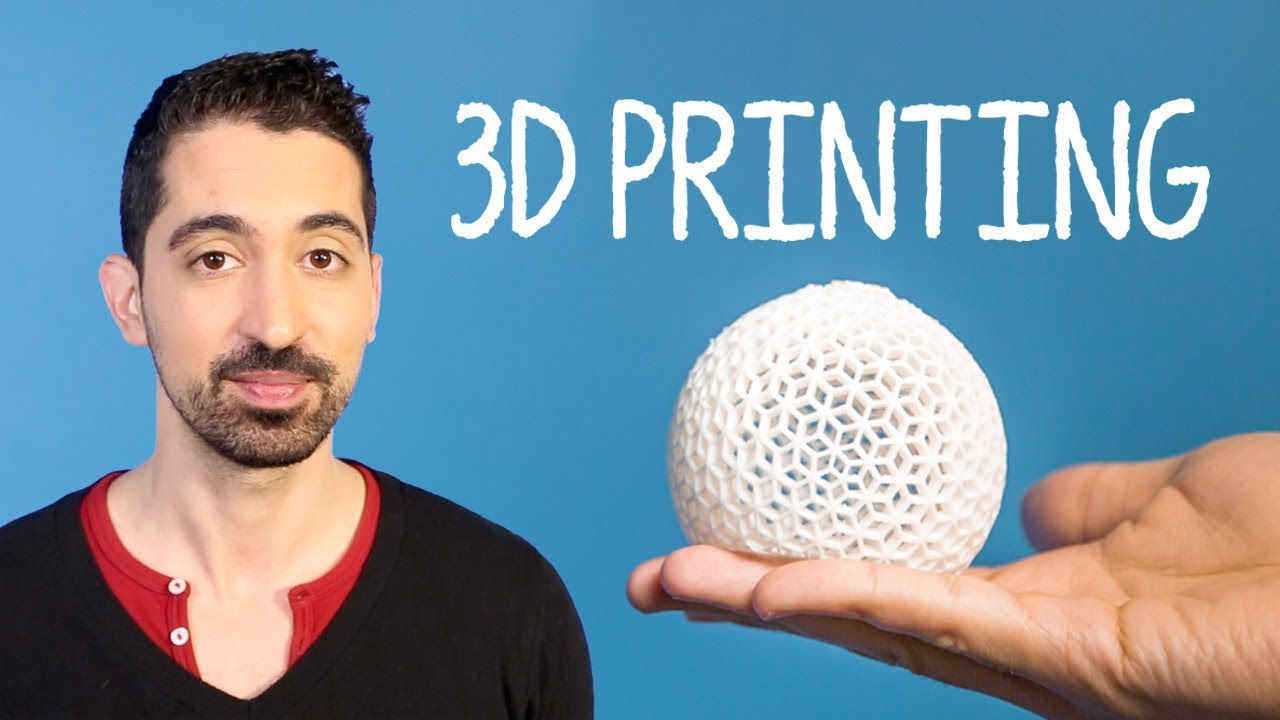
3D printing, also known as additive manufacturing, is a groundbreaking technology that allows for the creation of three-dimensional solid objects from digital models. This technology is able to transform digital 3D design files into physical objects by constructing successive layers of material. While 3D printing has been around since the 1980s, it has recently seen a surge in popularity and accessibility due to lower printer costs and an increasing variety of materials that can be used. This technology promises to revolutionize how products are made across many industries including aerospace, consumer goods, medical, and automotive.
This paper will provide an overview of 3D printing technology, including its history, key types of 3D printers, common printing materials used, applications across different industries, and current research trends to advance this innovative field. By examining the current state and potential of 3D printing, we aim to illustrate how this disruptive manufacturing technique can stimulate innovation and bring new opportunities in product design and development that were not possible before.
History of 3D Printing Technology
The invention of stereolithography, the first commercially viable 3D printing technique, is generally cited as the beginning of modern 3D printing. In 1984, Charles Hull filed a patent for stereolithography and later co-founded the company 3D Systems to commercialize the technology. Stereolithography works by curing liquid photopolymer resin layer by layer using a UV laser beam.
Building on Hull’s work, other additive manufacturing techniques soon emerged including fused deposition modeling (FDM) in the late 1980s. FDM works by extruding thermoplastic materials through a heated nozzle to build objects layer by layer. In 1993, SLM Solutions was founded and began developing selective laser melting (SLM), which uses a high-power laser to fuse metal powder together. Advances in hardware and software continued throughout the 1990s and into the 2000s, driving down 3D printer costs and spurring broader adoption. Now known as additive manufacturing, the field has expanded to include polymer jetting, powder bed fusion, binder jetting, material jetting, directed energy deposition and other processes. Desktop 3D printers became available in the late 2000s, fueling the current 3D printing revolution and taking this disruptive technology mainstream.
Common 3D Printing Technologies
Today, there are many different types of 3D printing technologies. The most widely used processes can be summarized as follows:
Fused Deposition Modeling (FDM): As noted earlier, FDM is the most common desktop 3D printing method. It works by heating and extruding thermoplastics like ABS or PLA through a small nozzle to construct layers.
Stereolithography (SLA): SLA uses a UV laser to cure liquid photopolymer resin into solid layers. It produces highly detailed prints but requires more expensive resins.
Selective Laser Sintering/Melting (SLS/SLM): These powder-based techniques fuse small particles (typically nylon or metal) together using a high-power laser. They can produce functional prototypes and end-use parts with excellent mechanical properties.
Multi-Jet Fusion (MJF): MJF is a powder bed fusion process that deposits binding agents onto powdered material to build each layer. It offers full-color, multi-material capabilities and is well-suited for end-use manufacturing.
Binder Jetting: Inkjet printhead technology deposits a liquid binding agent onto powder layers to solidify selective areas in each pass. It is efficient for producing sand molds and prototypes.
Directed Energy Deposition (DED): A focused thermal energy source (laser, electron beam) is used to fuse materials by melting as they are being deposited. Well-suited for repair, metallic parts, and complex geometries.
3D Printing Materials
The selection of 3D printing materials has greatly expanded beyond plastics to include multiple polymer, metal, ceramic and composite materials. Common thermoplastic and photopolymer filaments/resins used in desktop machines include:
Polylactic Acid (PLA): PLA is a bio-degradable plastic derived from corn starch. It is affordable and prints well on most desktop FDM printers. It has limited heat tolerance.
Acrylonitrile Butadiene Styrene (ABS): ABS is durable, impact-resistant, and chemical-resistant compared to PLA but requires an enclosed print environment.
Polyethylene Terephthalate (PET): PET is dimensionally stable and chemical-resistant like ABS but is less brittle and warps less during printing.
Nylon: Nylon offers exceptional durability, flexibility, and heat resistance over PLA and ABS but requires higher print temperatures.
Polycarbonate (PC): As a thermoplastic polycarbonate, PC provides impact resistance as well as high strength and temperature stability. It is difficult to print.
Photopolymers: Resins cured by UV light provide highly precise replicates and details for SLA printing. Common materials include accurax, flexible, castable resins and durable engineering resins.
Waxes: Phase change waxes are useful for casting and investment casting with 3D printing.
Metal, ceramic and composite filaments/powders seeing industrial use include stainless steel, copper, aluminum, titanium, tungsten carbide, zirconium oxide, carbon fiber, and glass fiber reinforced variants. 3D printing enables new material combinations not possible with conventional manufacturing.
Industrial Applications of 3D Printing
Beyond prototyping, 3D printing is finding widespread use across many industries for low-volume manufacturing and mass customization:
Aerospace – Complex aircraft and rocket engines are now 3D printed with advanced alloys like nickel superalloys. Parts with intricate internal structures save weight and improve performance.
Automotive – From seating to trim components to turbocharger housings, 3D printing allows for light-weighting and on-demand parts production. F1 and racing teams are early adopters.
Dental/Medical – Implants, scaffolds, and surgical guides are made using biocompatible materials. Precision replicates of anatomy enhance pre-surgical planning. Hearing aids and prosthetics deliver custom-fitted solutions.
Consumer Products – Jewelry, toys, fashion accessories, and electronic enclosures gain new designs leveraging 3D printing. Rapid customization appeals to Millennial buyers.
Heavy Industry – Large-scale 3D metal printing fabricates tools, molds, and heavy machinery components avoiding costly CNC machining and assembly steps.
Research has unlocked even high-value prospects like 4D printing that enables active shape-shifting components and advanced manufacturing for space exploration systems like habitats and tools. By overcoming design constraints, 3D printing brings unique advantages to virtually every industry.
Research Trends in 3D Printing Technology
For 3D printing to reach its full disruptive potential, ongoing research aims to develop faster, multi-functional additive processes, advanced materials, and integrated smart manufacturing systems. Key areas of active exploration include:
Polyjet Printing: Jets of photocurable liquid materials with support structures allow for multi-material objects with rubber-like textures, variable rigidity zones and embedded electronics.
4D Printing: “4D printing” involves materials that can change shape or functionality over time when activated by water, heat, or other stimuli for smart biomedical or robotic devices.
Large-Scale Metal Printing: Powder bed fusion systems the size of small buildings are creating functional metal parts measuring meters in size for things like tooling and architecture.
Bioprinting: 3D bioprinting builds anatomically correct living human tissues and organs layer-by-layer using biological cells, biomaterials like hydrogels and growth factors for regenerative medicine applications.
Carbon Fiber Printing: Filaments loaded with continuous long-fiber carbon for producing end-use parts with high strength-to-weight ratios are being combined with standard plastics in new multimaterial systems.
Nanoscale 3D Printing: Developments in two-photon lithography aim to achieve feature sizes down to 10 nanometers for photonic crystals and new classes of 3D micro- and nano-electromechanical systems (MEMS and NEMS).
As processing speeds increase and advanced materials emerge, 3D printing promises to revolutionize design, prototyping and manufacturing across nearly every sector for personalized on-demand creation and localized distributed manufacturing. With ongoing research pushing the boundaries, the future of additive manufacturing looks very promising.
3D printing is an innovative technology that has advanced significantly since its inception. By enabling the digital fabrication of physical objects through additive layering, 3D printing holds huge potential to transform traditional manufacturing. Drop in printer costs as well as growing material options have fueled adoption in prototyping applications, particularly for medical, aerospace and industrial sectors. Meanwhile, research continues expanding capabilities into multi-material composites, biomanufacturing and large-scale metal additive techniques. As the technology matures, global-scale on-demand distributed manufacturing may become viable realities. With prolific developments underway, 3D printing is sure to disrupt manufacturing as we know it and stimulate innovations not possible before now.
 Andrew Stroud