

The SAT Writing and Language Test and Essay
The SAT includes an optional essay section as well as a Writing and Language Test that examines your ability to identify and correct errors in grammar, punctuation, organization, and other aspects of writing. Together, these sections provide insight into your writing skills which are important for college and career readiness. In this article, we will cover the format and scoring of each part of the SAT’s writing assessment while also providing helpful tips and strategies for maximizing your performance.
SAT Writing and Language Test
The SAT Writing and Language Test consists of 44 multiple-choice questions to be completed within 35 minutes. The questions are based on passages adapted from previously published works across various content areas and assess your command of standard written English conventions and expressions. You will be asked to identify and correct grammatical errors, improve organization and coherence, strengthen word choice, and more.
The passages are typically between 300-450 words and are followed by 11-14 related questions. Question types include identification of errors, improvement of sentence structure and flow, and assessment of usage and effective word choice. While content knowledge is not directly tested, having background on the passage topic may help with context clues. Scoring is on a 200-800 scale where a score of 400 or higher is considered a strong performance.
To perform well, focus on these key strategies:
Carefully read the entire passage before reviewing the questions to get a sense of context, flow, and any possible themes/ideas.
Pay attention to grammatical constructions like subject-verb agreement, pronoun reference, modifiers, parallel structure, and consistent verb tenses/moods.
Check for errors in punctuation including commas, semicolons, apostrophes, and end punctuation. Incorrect usage can alter intended meaning.
Consider logical relationships and transitions. Questions may ask how to best sequence or link ideas for coherence.
Evaluate precision and conciseness of wording. Is the intended meaning clearly conveyed or is there a better way to phrase something?
Parse question stems fully and verify your answers in the passage text. Eliminate distraction choices.
Watch time to have opportunity to review any skipped questions near the end. Work methodically without rushing.
Consider remaining questions if finishing early to maximize score potential. Guessing omitted questions does you no harm.
By recognizing frequent error types and practicing identifying errors under timed conditions, you can train your “editor’s eye” for success on Test Day. Knowing your strengths and weaknesses from practice tests can guide targeted review.
SAT Essay
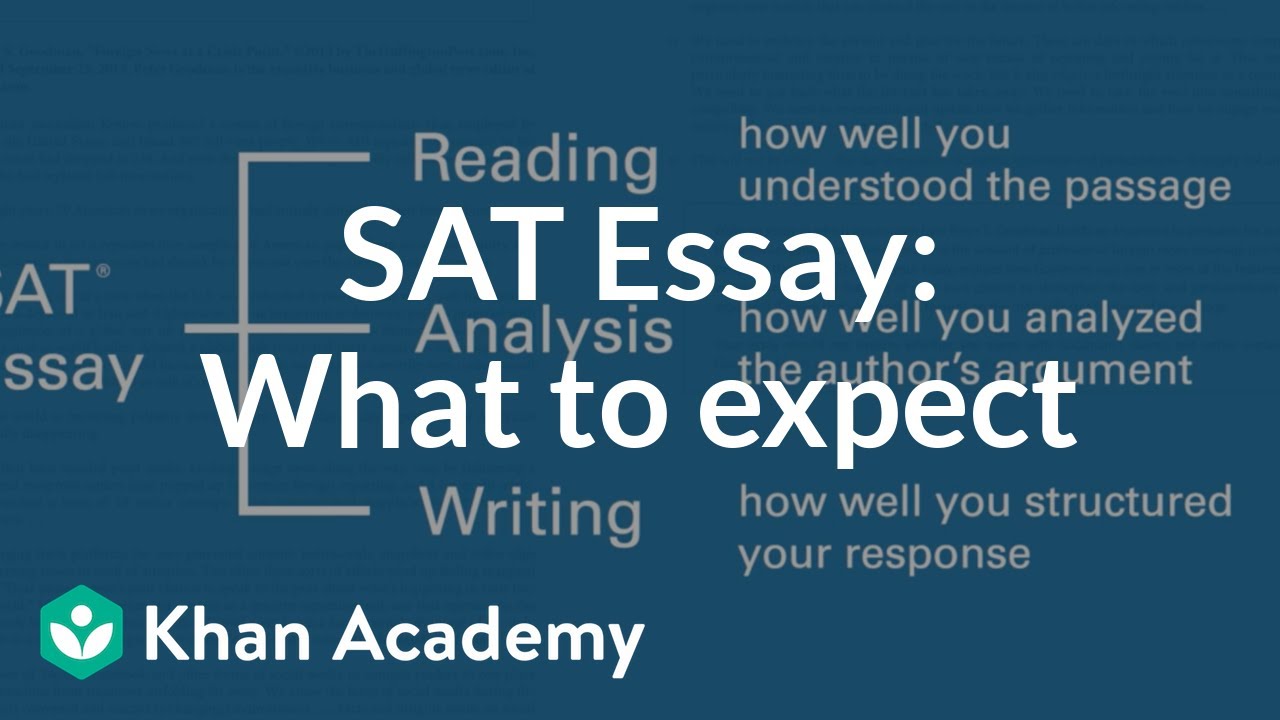
The SAT Essay is an optional section taken during the regular SAT and is recommended by some colleges for applications. It provides a different perspective on your writing beyond multiple choice. In 50 minutes, you will be presented with a long passage containing multiple perspectives on an issue and asked to analyze the development of ideas within the text, how the author uses reasoning and evidence to support their points, and how effectively the passage communicates the issue.
Your task is to plan and write a cohesive, well-developed analysis that synthesizes at least three of the key elements from the passage as evidence for your argument. The SAT readers evaluate your essay based on your ability to comprehend the argument, effectively address the prompt, organize and develop your thoughts, use precise language and maintain formal style, and demonstrate control of standard writing conventions. Scoring is on a 2-8 scale for each of these four domains, yielding a total score from 8-32. A score of 24 or higher meets the benchmark of “College and Career Ready.”
Some advice for the SAT Essay:
Carefully read the passage multiple times to fully grasp perspectives and lines of reasoning before starting your outline. Note potential key evidence details.
Plan your response with an intro paragraph, at least three body paragraphs incorporating cited evidence from different parts of the passage, and a conclusion paragraph.
Address all aspects of the prompt and maintain a clear, coherent structure throughout. Transitions between ideas are important.
When citing evidence, directly quote or paraphrase relevant details and explicitly connect them back to your argument.
Employ a formal, objective tone without personal pronouns or opinions. Maintain an academic style.
Proofread thoroughly for grammar, usage, mechanics, and formatting errors which can detract from your analysis.
Budget your time so the bulk is spent on planning, writing, and revising with 5-10 minutes left for final review and edits.
Practice under timed conditions with a variety of prompts to build stamina and comfort for Test Day.
With regular writing experience analyzing dense texts and crafting well-supported essays, you can develop the skills measured by the optional SAT Essay and feel confident showcasing your communication abilities. Taking full advantage of feedback further improves quality over time.
SAT Writing Resources and Test Day Tips
To maximize your SAT performance in writing, be strategic about utilizing available preparation materials. Official SAT practice tests and Khan Academy lessons/drills provide exposure to realistic questions and prompts. Third-party workbooks, online courses, and tutoring can supplement review of frequent error types, essay structure guidelines, and more. Timed practice is crucial. Monitor your progress and focus on weaknesses revealed to continually advance skills.
On Test Day, get organized with your preferred pencil/pen, eraser, admittance forms, and approved calculator if using. Arrive early, follow instructions carefully, and pace yourself during each section. For the essay, take advantage of planned time for additional proofreading at the end to catch minor errors before submitting your response. Relax and focus your energy – you’ve put in the work, now it’s time to show what you know. Your writing performance matters for admission and will be positively impacted through diligent preparation.
The SAT assesses important writing skills through its Language Test and optional essay that provide insight beyond course grades. By comprehending each part’s scoring rubrics, carefully reviewing types of grammar, organization and style questions, and getting experience with timed practice, you strengthen your ability to perform confidently on Test Day. Remember to pace yourself and utilize all the time given while demonstrating your strongest communication through well-structured writing. Consistent preparation is key for success on this critical piece of the SAT.
 Andrew Stroud